Origins of Linen: The Tale of Flax and the Land
Linen is not merely a fabric; it is a narrative woven through history. It begins with flax, a tall, slender plant that thrives in temperate climates, its fibers curling like stories told by a patient loom. The journey from field to fiber begins with careful farming practices that influence the fiber's length, strength, and luster. In regions where soil, rainfall, and microclimates harmonize, flax plants yield long, even fibers that become the backbone of linen textiles.
The transformation from flax to linen is a choreography of retting, breaking, scutching, and hackling—processes that separate the fiber from the shives and align the filaments for spinning. Each step leaves an imprint on the fabric's character: breathable air channels, natural moisture management, and a texture that invites touch. Linen's origin story, rooted in Europe and framed by centuries of craft, lends linen bedding a quiet authority that modern fabrics rarely imitate.
As you choose linen for bedding, you are choosing a material that grows wiser with time. Linen’s fibers possess hollow cores, a feature that contributes to its exceptional breathability and moisture-wicking properties. The material's innate roughness softens with every wash, revealing a texture that becomes more inviting as summers grow warmer and nights cooler.
Fiber Structure: Why Linen Breathes, Wicks, and Regulates Temperature
The science behind linen begins at the micron level: flax fibers are hollow and possess a natural stiffness that resists creasing while maintaining structure. This macro- and micro-architecture creates air spaces within the fabric, enabling superior airflow. The result is a fabric that feels cool to the touch on warm nights and still substantial enough to feel comforting during cool evenings.
Linen's moisture management is a standout trait. Its fibers wick moisture away from the skin more efficiently than many other natural fibers, helping to keep your sleeping surface dry and comfortable. This quality is not simply about dryness; it is about the body’s equilibrium—perceiving the linen as a natural regulator rather than a mere blanket.
Color, weight, and weave are not afterthoughts in linen design. Linen can be stone-washed for a softer hand or left with a crispness that reflects a more tailored interior aesthetic. The weight of linen—whether a lighter summer sheet or a mid-weight duvet cover—will influence how it drapes, how it feels when you climb into bed, and how it responds to laundering.
Care as a Cultural Practice: Maintaining Linen’s Integrity
Caring for linen is less about ritual devotion and more about stewardship. Linen is known for its durability, but it rewards patient, predictable care. The simplest paths—washing cold or warm with like colors, avoiding harsh chemical bleaches, and line-drying or low-heat tumble drying—preserve the fiber’s integrity and color.
Practical tips to extend linen’s life:
- Wash linen at moderate temperatures (cold to warm) to minimize fiber fatigue and shrinkage.
- Avoid high-heat drying; opt for gentle tumble or line-dry to preserve the fabric’s texture and shape.
- Iron settings can vary; many linen pieces benefit from a warm iron while still slightly damp, which helps set the smooth, crisper lines without over-processing.
- Stone-washed linen gains a softer hand over time, making it a preferred choice for those who value a naturally relaxed look and tactile warmth.
Styles and Uses in Modern Interiors
Linen bedding anchors a room with a sense of calm and refinement. In modern interiors, it is commonly layered with other natural textures—wood, wool, cotton—to create a palette that breathes and evolves with the occupant’s daily rhythms. Linen’s versatility is visible in the way it wears: interplays of light and shadow across its surface shift subtly, offering a lived-in elegance without sacrificing polish.
Whether you’re drawn to the clean lines of a minimalist loft or the warm textures of a coastal retreat, linen can adapt. The same sheet set can appear crisp during a guest-ready morning and soft and inviting after a week of nightly use. It is a fabric that rewards patience, much like a well-curated room that ages gracefully.
In antiquity, linen’s significance extended beyond comfort; it was a symbol of purity, status, and ritual. Linen’s presence in mummification rituals and textile industries across the Mediterranean laid the groundwork for linen’s enduring association with cleanliness, breathability, and ceremonial care. The ancient craftspeople understood linen’s life cycle long before modern machines—yet their insights echo in today’s care practices.
Period: roughly 3000 BCE to 100 CE
Europe’s weaving centers, from Flanders to the Iberian Peninsula, refined linen as a luxury yet durable textile. The era’s master weavers pushed fineness, dye stability, and finishing techniques that gave linen a reputation for resilience and elegance. Their innovations—stone washing, calendaring, and meticulous thread control—find echoes in contemporary linen bedding’s texture and finish.
Period: 14th–17th centuries
In our time, designers treat linen as a flexible canvas—an element that blends sustainability with comfort. Today’s textile houses source flax with strict standards and employ stone-washed, garment-washed, and enzyme finishes to craft linen bedding that performs across seasons. The shift toward sustainable sourcing aligns linen’s long history with present-day ethics and circular design.
Period: 20th–21st centuries
Product Spotlight: Layla Linen Sheet Sets
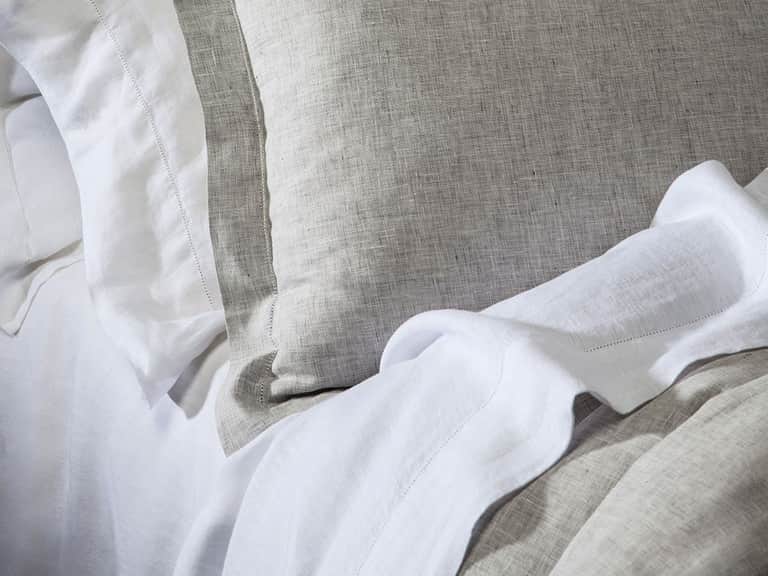
The Layla Linen Sheet Set from DownTown Company embodies linen’s relaxed elegance. Crafted from 100% flax linen, the stone-washed finish yields a tactile softness that invites daily use. The set’s breathable weave adapts to changing temperatures, offering a cooling feel during warmer nights and a gentle warmth when temperatures dip.
Made in Portugal by a mill with a heritage spanning more than a century, Layla Linen embraces a simple aesthetic: pure white linen, a single hemstitch detail, and an emphasis on labor-intensive craft that translates into enduring, usable luxury.
Layla Linen Sheet Sets, 720 USD, made in Portugal
Conclusion: Linen as a Living Medium
Linen remains a living medium—one that speaks of history, of land, and of the careful hands that keep it in use. Its breathable architecture, moisture management, and evolving softness create an experience that is both practical and poetic. As you consider linen for your bedding, you are choosing not merely a fabric, but a connection to a long lineage of makers, farmers, and dreamers who have turned flax into a language—the language of rest, clarity, and quiet luxury.